

Trashi Yangtse is the northeasternmost district of Bhutan, established in 1992 after being carved out of Trashigang. It is a quiet, beautiful region where nature and traditional craftsmanship are the primary ways of life.
The district is characterized by lush alpine and subtropical forests, with the town itself sitting at a comfortable altitude of Approximately 1,871m (6,138 ft).
Top Things To See and Do
1. Traditional Woodturning (Dappa)
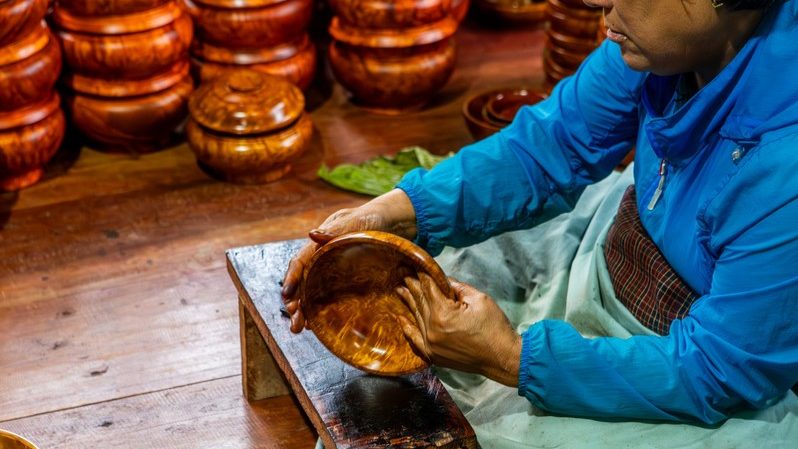
The district is the most famous place in Bhutan for Dappa (hand-turned wooden bowls). These bowls are carved from maple or avocado wood and are prized for their perfect fit – traditionally used as airtight containers for carrying food.
2. Chorten Kora – The Stupa of Legends
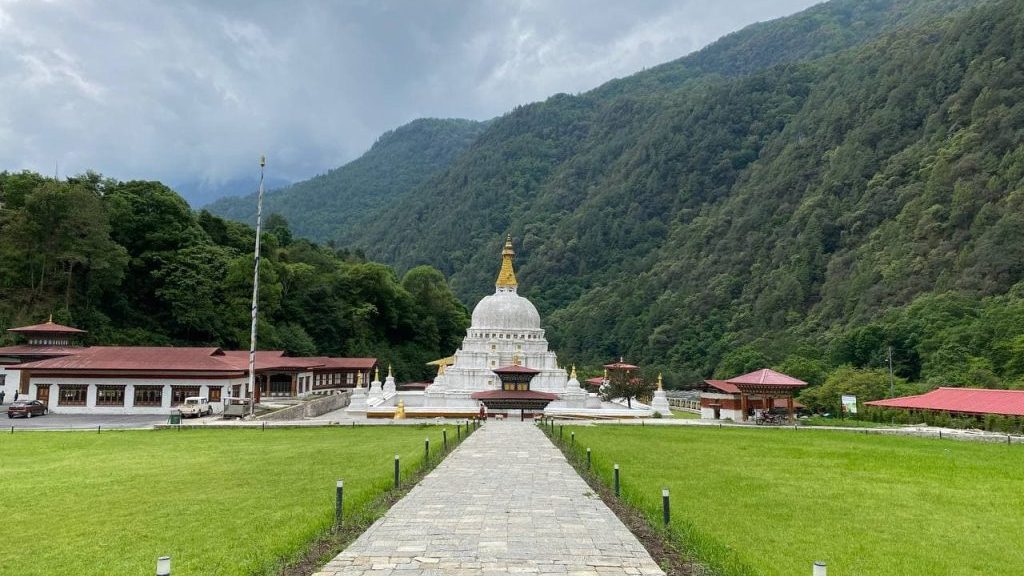
This is the district’s most iconic landmark. Modeled after the Great Boudhanath Stupa in Nepal, it is a massive, dazzling white structure situated by the riverbank. It is said that a young princess from the neighboring Tawang region (India) self-entombed herself within the stupa as a sacrificial act to subdue a local demon.
3. Bumdeling Wildlife Sanctuary
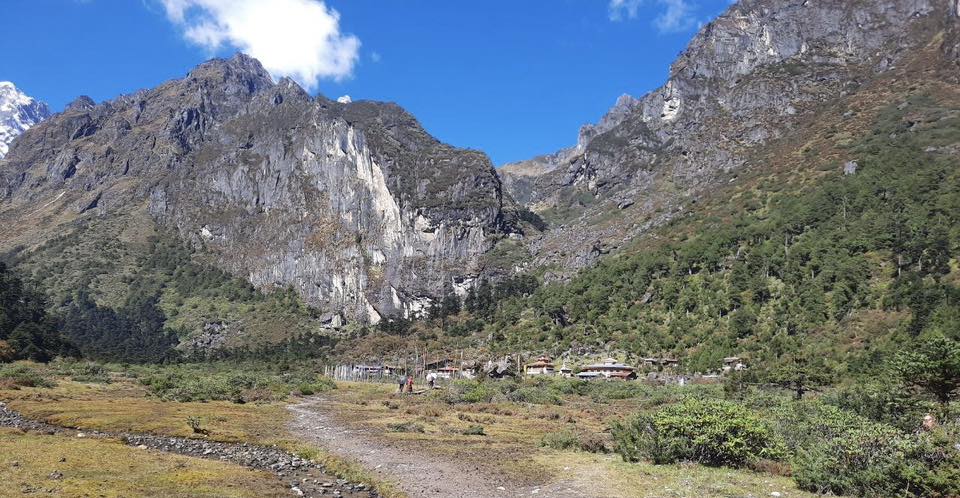
A haven for nature lovers, this sanctuary is one of Bhutan’s most important protected areas.
- Black-Necked Cranes: Every winter (November to March), these endangered birds migrate here from the Tibetan Plateau.
- Rare Species: It is also a habitat for the Red Panda, Snow Leopard, and the Ludlow’s Bhutan Glory – the national butterfly of Bhutan, which was rediscovered here after 76 years.
4. Institute of Zorig Chusum (The School of Arts)
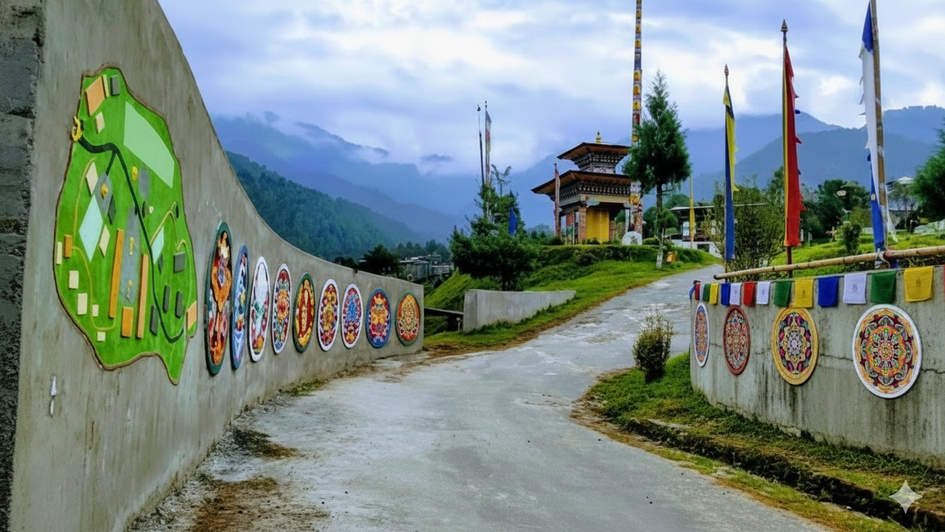
Trashi Yangtse is a hub for the “13 Traditional Arts.” The institute here is a sister school to the one in Thimphu.
What to see: You can watch students practicing woodcarving, pottery, embroidery, painting, and sculpture. It’s a great place to see the future of Bhutanese art in the making.
5. Ruins of Tshenkharla Dzong
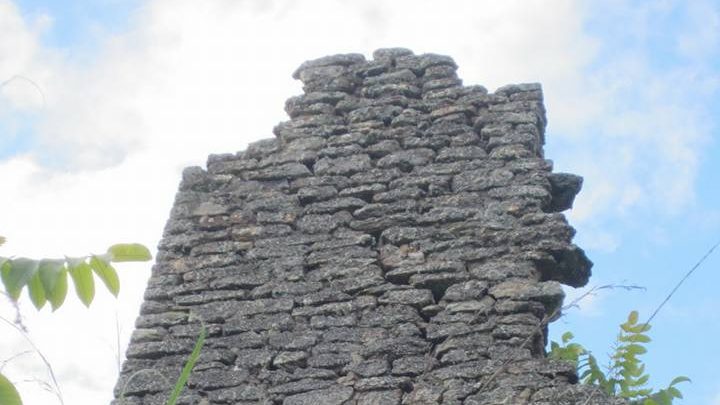
Historians believe this was the first dzong ever built in Bhutan, constructed in the 9th century by a Tibetan prince. Though mostly in ruins now, it offers a hauntingly beautiful glimpse into Bhutan’s ancient history.
Special Events in Trashi Yangtse
1. Chorten Kora – The Stupa Festivals
There are two distinct festivals held at the great white stupa, drawing thousands of pilgrims from across the region and even from India.
Dakpa Kora
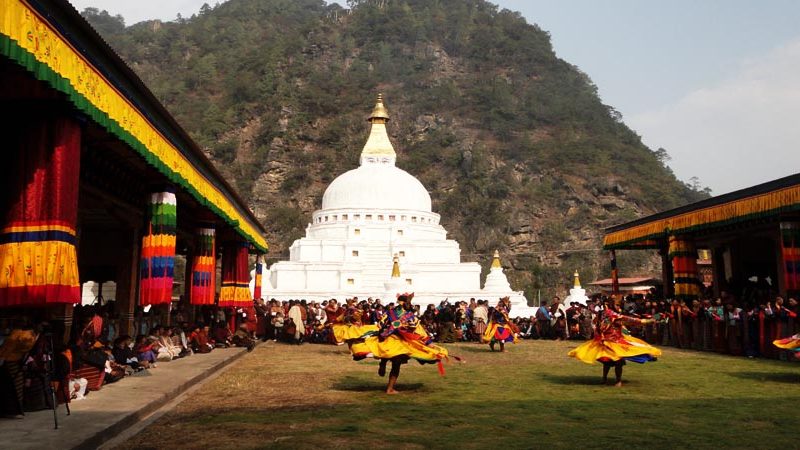
- The Focus: This is for the Dakpas, the people from Tawang in Arunachal Pradesh, India.
- The Legend: It honors a princess from Tawang who is believed to have sacrificed herself by being entombed alive in the stupa to meditate for the benefit of all beings.
- The Experience: You will see a fascinating mix of cultures as Indian highlanders join the local Bhutanese in a day-and-night circumambulation.
Drukpa Kora
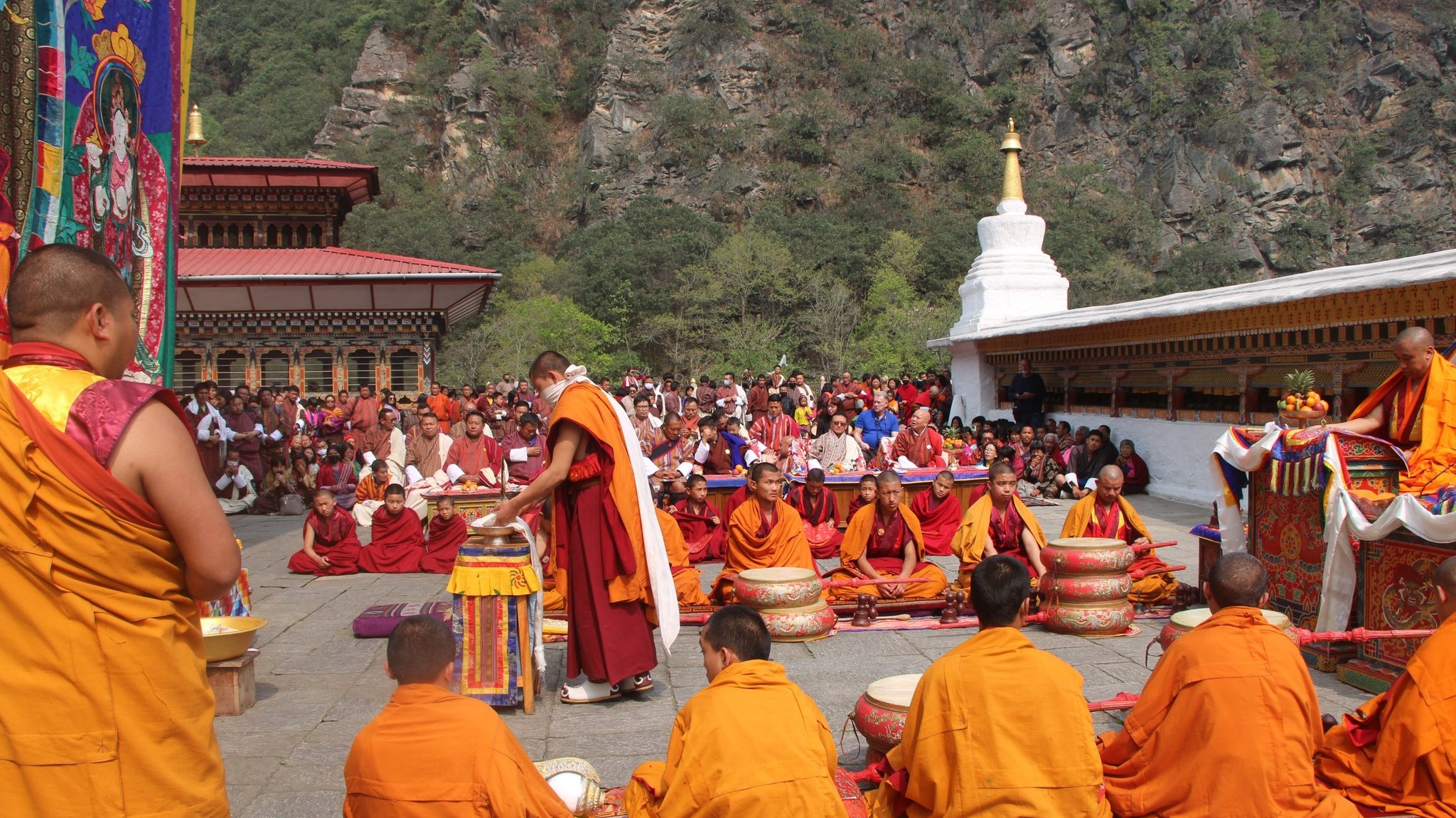
- The Focus: This is the festival for the Drukpas (the Bhutanese people).
- The Experience: It occurs on the auspicious 30th day of the first lunar month. It is a massive social and religious gathering where people from all over Eastern Bhutan congregate to pray, socialized, and circle the stupa.
2. Gomphu Kora Festival
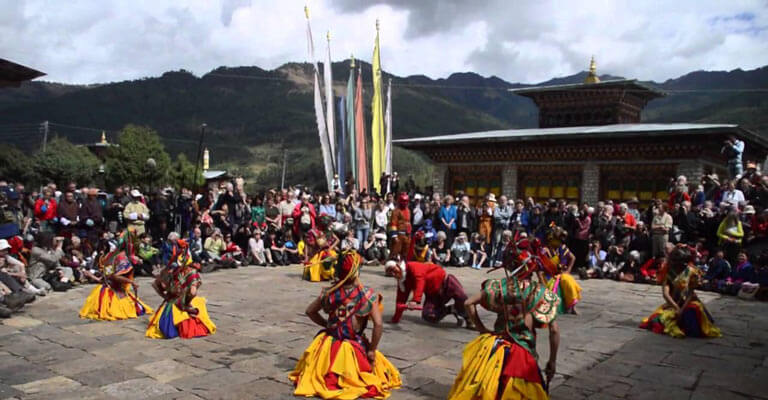
While Gomphu Kora is technically on the border of Trashigang and Trashi Yangtse, it is an essential stop for travelers in this region.
This is famous for the “Night Kora.” People carry torches and walk around the sacred meditation cave of Guru Rinpoche all night long. It is known as a popular place for young people to meet and for deep spiritual merit-making.
3. Black-Necked Crane Farewell Festival (February 5 – 6)
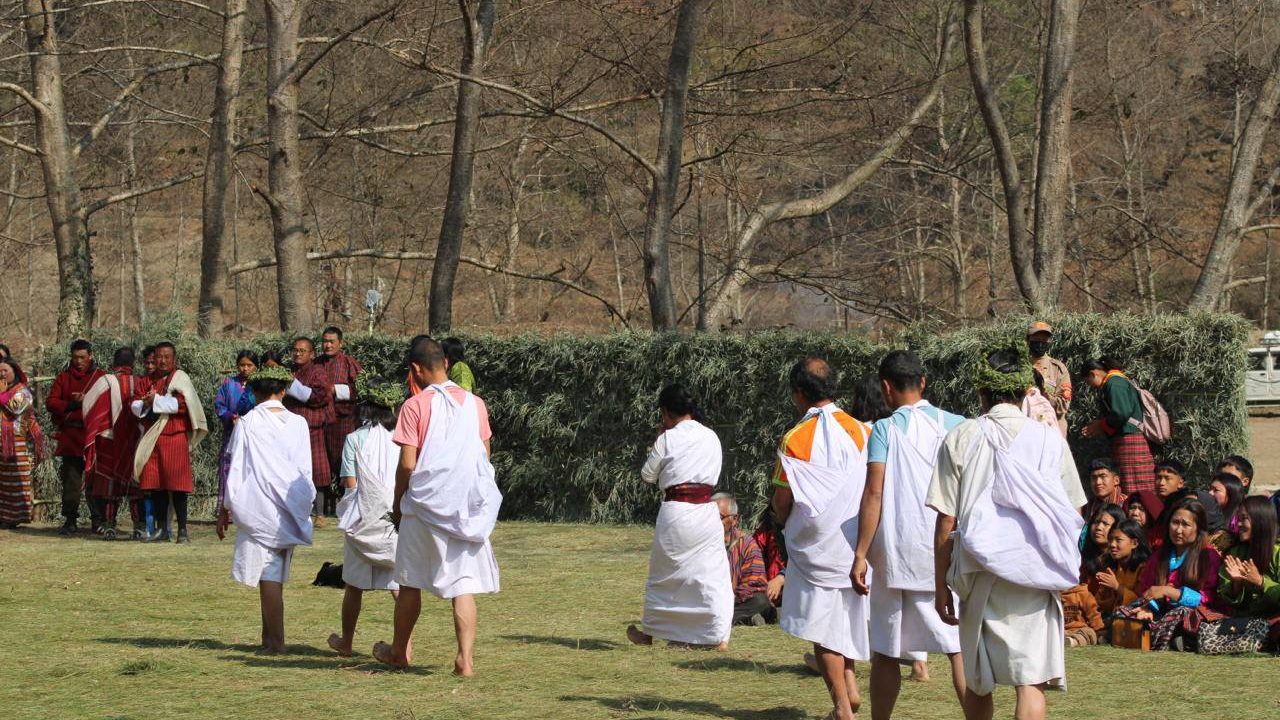
Held in the Bumdeling Valley, this festival celebrates the departure of the endangered cranes as they fly back to Tibet for the summer. It features local songs, dances, and environmental themes.
4. Trashi Yangtse Annual Tshechu
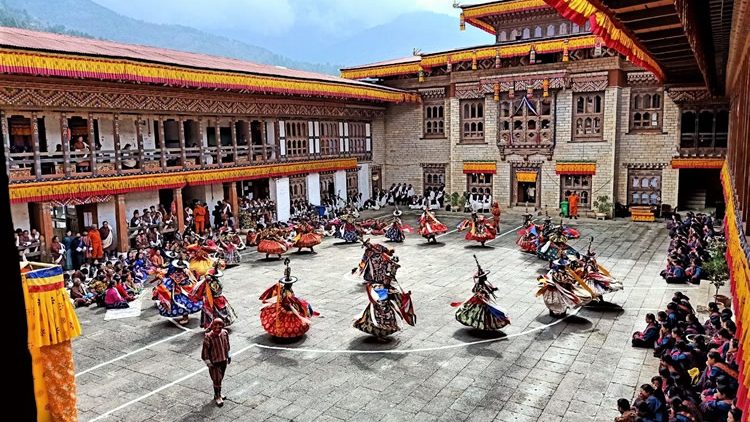
Held at the Tokaphu Lhakhang, this is a more traditional Tshechu featuring the sacred mask dances (Cham) seen in other parts of Bhutan, but with a cozy, communal eastern feel.